Weixinli Weixinli Weixinli Weixinli Weixinli Weixinli Weixinli Weixinli Weixinli Weixinli Weixinli Weixinli Weixinli Weixinli Weixinli
Industry News

Home / News / Industry News / Electric Commercial Kitchen Countertop Griddle: The Flat Top That Feeds the Rush

Electric Commercial Kitchen Countertop Griddle: The Flat Top That Feeds the Rush

POST BY WeixinliAug 21, 2026

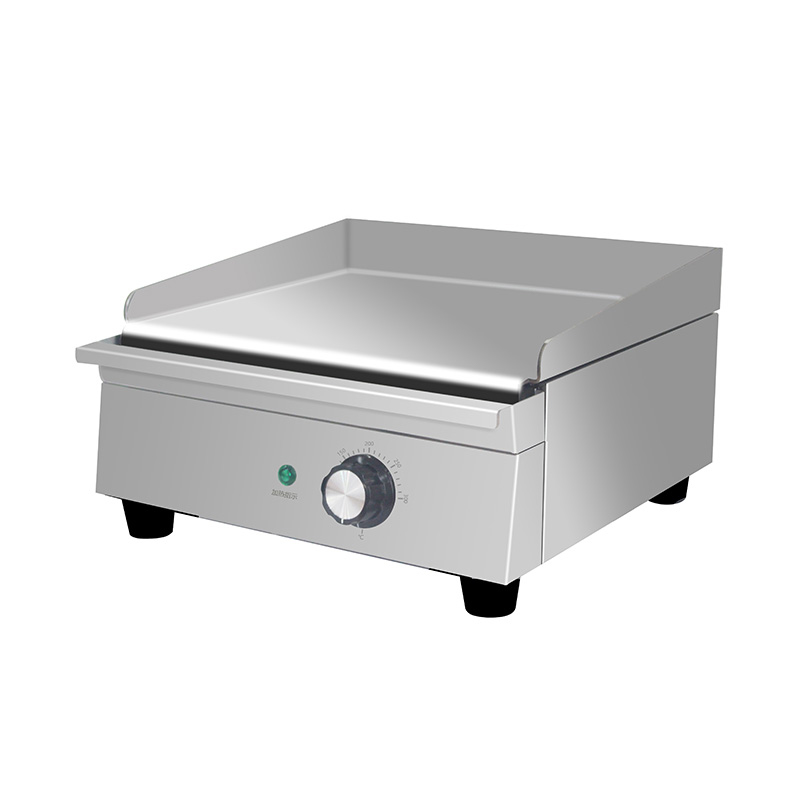
A stack of pancakes, a row of burgers, a dozen eggs over easy. All of it hits the griddle at once. An electric commercial kitchen countertop griddle is a slab of heated steel that turns raw protein and batter into plated food without a pan in sight. It plugs into a wall outlet, heats to a set temperature, and holds that heat through a lunch rush that never lets up. The countertop footprint fits where a full range cannot. For diners, food trucks, breakfast cafes, and catering kitchens, the griddle is the workhorse that never leaves the line.

000151

The Plate That Distributes the Heat

The cooking surface is a thick steel plate, typically cold-rolled steel or chromium-alloy steel. Thickness determines heat retention. A thin plate cools the instant food hits it. A plate ten millimeters or thicker holds temperature through a full load of frozen patties. An electric commercial kitchen countertop griddle with a thick cooking surface sears instead of steams.

The heating elements sit under the plate, clamped or embedded. Even contact between the element and the plate means even heat across the surface. Hot spots burn pancakes. Cold spots leave bacon raw. An electric commercial kitchen countertop griddle manufacturer that bonds the elements to the plate or uses a precision-machined contact surface eliminates temperature variation.

The thermostat controls the heat. A capillary thermostat with a sensing bulb in the plate reads the actual surface temperature and cycles the element to hold the set point. An electric commercial kitchen countertop griddle with an accurate thermostat keeps the surface within a narrow temperature band instead of swinging from too hot to too cold.

The Trough That Catches the Grease

Everything cooked on a griddle releases fat. Bacon, burgers, sausage, hash browns. The grease has to go somewhere. A channel around the perimeter of the plate collects it. The surface tilts slightly toward a drain hole. An electric commercial kitchen countertop griddle with a well-designed grease management system sends the fat into a removable drawer or a collection bucket.

The grease drawer pulls out from the front. It is stainless steel and small enough to fit in a dishwasher or a sink. A cook empties it mid-shift without moving the griddle. An electric commercial kitchen countertop griddle manufacturer that makes the drawer accessible and leak-proof prevents the grease fire that starts when a drawer overflows onto a hot element.

Splash guards on the sides and back keep grease from hitting the wall, the backsplash, and the adjacent counter. Stainless steel guards are standard. They lift off for cleaning. An electric commercial kitchen countertop griddle with properly fitted guards contains the mess within the cooking zone.

Controls, Recovery, and the Pace of the Line

The control knob sits on the front panel. It sets the temperature, typically from 50 to 300 degrees Celsius. The indicator light shows when the element is heating. An electric commercial kitchen countertop griddle with a responsive thermostat recovers quickly after a cold load hits the plate. Recovery time is the spec that matters during service, not the idle temperature.

The power rating determines recovery speed. A 3,000-watt griddle running on 240 volts recovers faster than a 1,800-watt unit on 120 volts. An electric commercial kitchen countertop griddle manufacturer matches the wattage to the plate thickness and the target kitchen volume.

The countertop footprint matters in small kitchens. A griddle that takes up a meter of counter space feeds a diner. A half-meter unit serves a breakfast bar or a food truck. An electric commercial kitchen countertop griddle sized for the expected volume does not waste space.

Here is what the griddle needs to handle the rush:

  • Steel plate ten millimeters or thicker for heat retention
  • Embedded or tightly bonded elements for even heat
  • Capillary thermostat with accurate, narrow temperature control
  • Front-access grease drawer and removable splash guards
  • Wattage matched to plate size and kitchen volume

Where the Griddle Goes to Work

Breakfast service runs on the griddle. Pancakes, French toast, eggs, bacon, and hash browns all cook on the same surface at the same time. An electric commercial kitchen countertop griddle with a large, even-heat surface lets the cook manage multiple orders without shuffling pans.

Burgers and sandwiches hit the griddle for lunch. The flat top sears patties and toasts buns side by side. An electric commercial kitchen countertop griddle in a burger joint runs continuously from open to close.

Food trucks and mobile kitchens rely on electric griddles because they eliminate the need for gas bottles and open flames. An electric commercial kitchen countertop griddle plugs into the truck's electrical system and heats up fast.

What Breaks on a Budget Griddle

The thermostat drifts. The set temperature no longer matches the actual plate temperature. An electric commercial kitchen countertop griddle with a quality thermostat stays calibrated. The grease drawer leaks at the seam. A welded stainless steel drawer does not. The plate warps from repeated heating cycles. A thick, stress-relieved steel plate stays flat.

An electric commercial kitchen countertop griddle is a simple machine. A heated plate. A thermostat. A grease drawer. But the food that pays the bills cooks on that plate. Choose a manufacturer that bonds the elements evenly, controls the temperature accurately, and manages the grease cleanly. The pancakes flip golden brown and the burgers sear medium uncommon. That is what the griddle is for.