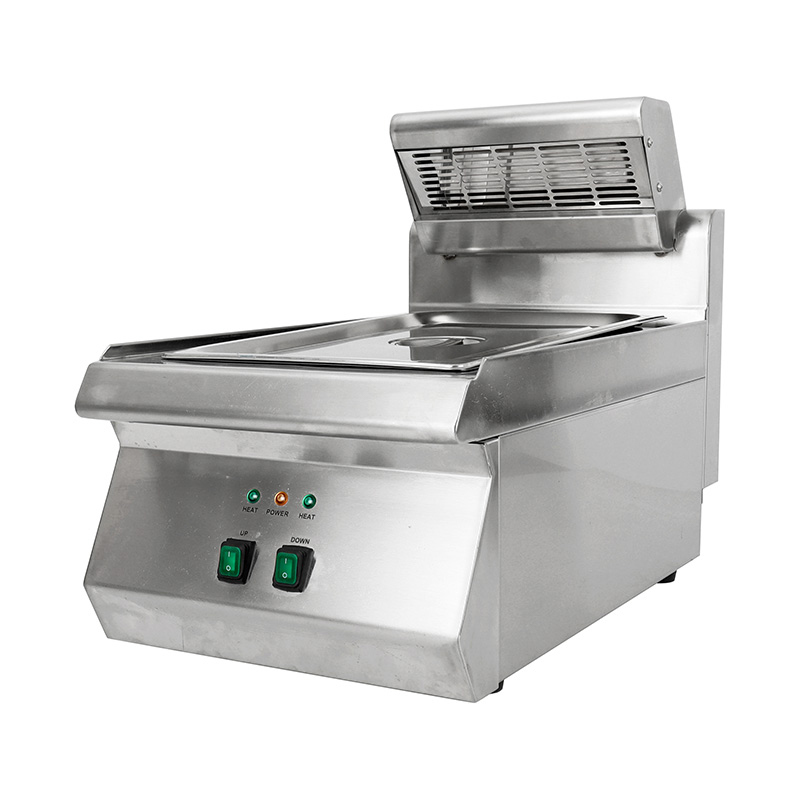
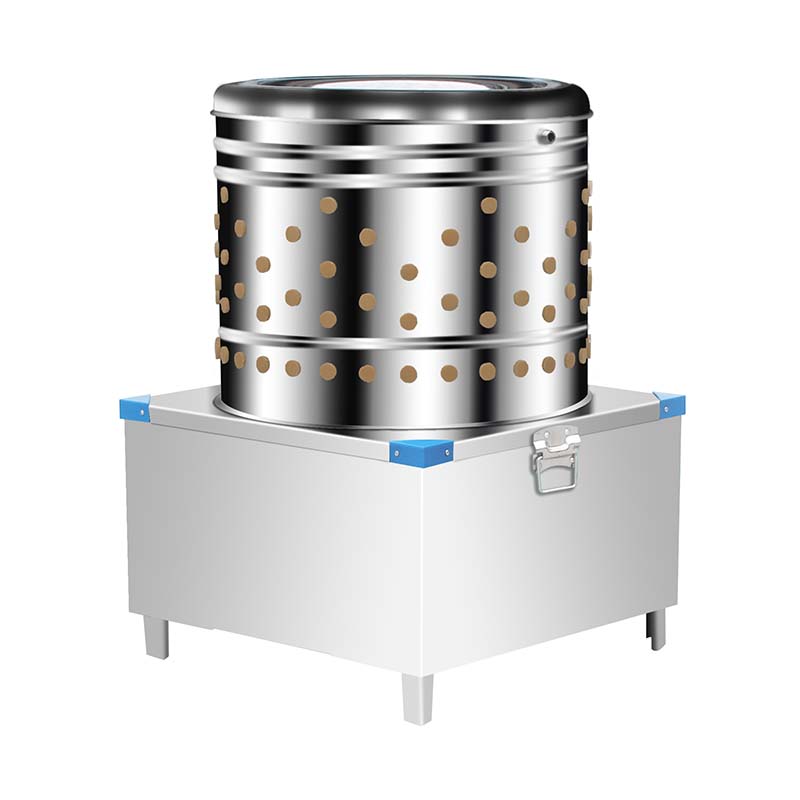
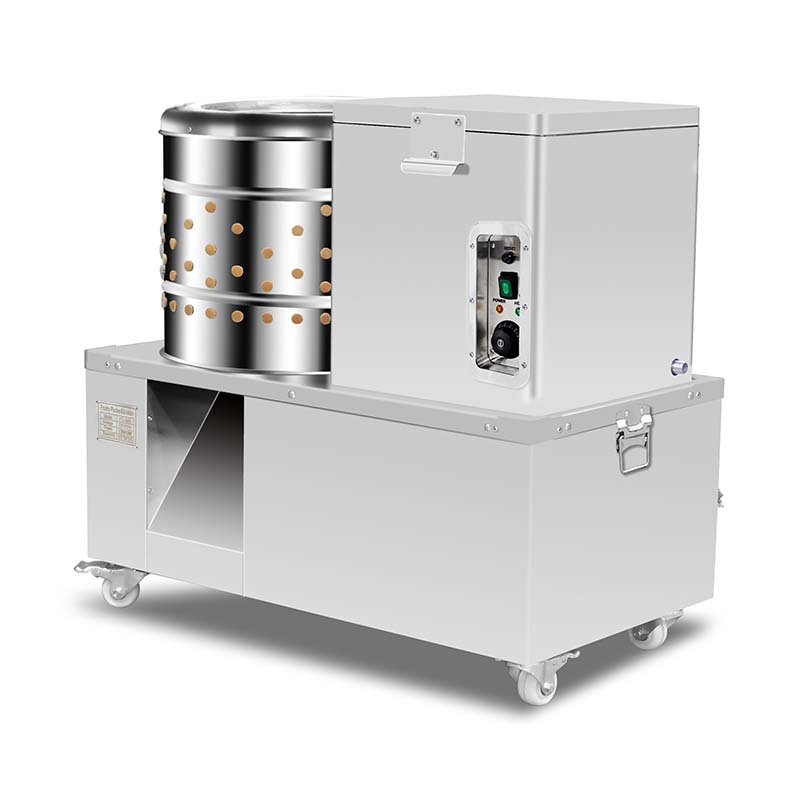
A fried potato starts losing its crust the moment it leaves the oil. The moisture inside moves toward the surface and the surface goes soft. The stainless steel commercial French fries warmer kitchen machine exists to slow that down. It holds the fries at serving temperature while moving the moisture away instead of letting it condense back onto the food.

A closed box with a heat lamp traps the steam. The fries sit in their own moisture and the crust softens within minutes. The warmer has to do the opposite. The heat source sits below or behind the holding area, and the airflow carries the moisture up and out through the vents.
The element heats the air. The air rises through the perforated pan. The steam leaves the cabinet instead of settling on the fries. The design of the vents matters as much as the size of the element. A warmer with vents in the wrong place holds the moisture in the top of the cabinet and drips it back onto the food.
The holding pan keeps the fries in place and lets the air through. It has to be perforated. The perforation lets the hot air rise through the pile and lets the oil and the crumbs drain to the bottom of the cabinet.
The perforation size is a balance. Too small and the air cannot move. Too large and the fries fall through onto the element. The pan is stainless steel so it does not rust and does not hold the smell of old oil. It lifts out for cleaning, and it goes into the dishwasher at the end of the shift.
Hold the fries too cool and they go limp. Hold them too hot and they keep cooking, drying out from the inside. The usable band is narrow, and the thermostat has to hold it.
A warmer that cycles wide swings above and below the band. The fries at the top of the pile dry out and the fries at the bottom stay soggy. A warmer with a steady thermostat keeps the whole pile in the same condition. The indicator light tells the operator when the cabinet is ready to load.
Here is what the machine has to get right:
The fast food counter puts the warmer between the fryer and the register. The fries go from the basket to the pan and stay there through the lunch rush. The food truck and the stadium stand use the warmer when the fryer and the customer are far apart. The fries travel in the warmer and arrive hot.
The fries come out soft because the steam had nowhere to go. The vent was blocked or the airflow was weak. The element burned out because it ran continuously without a rest. The pan rusts because the stainless was low grade. Each one is a design decision the operator discovers on a busy shift.
A stainless steel commercial French fries warmer kitchen machine holds the heat and moves the moisture. The fries stay crisp long enough to sell. The crust holds until the customer takes the first bite.