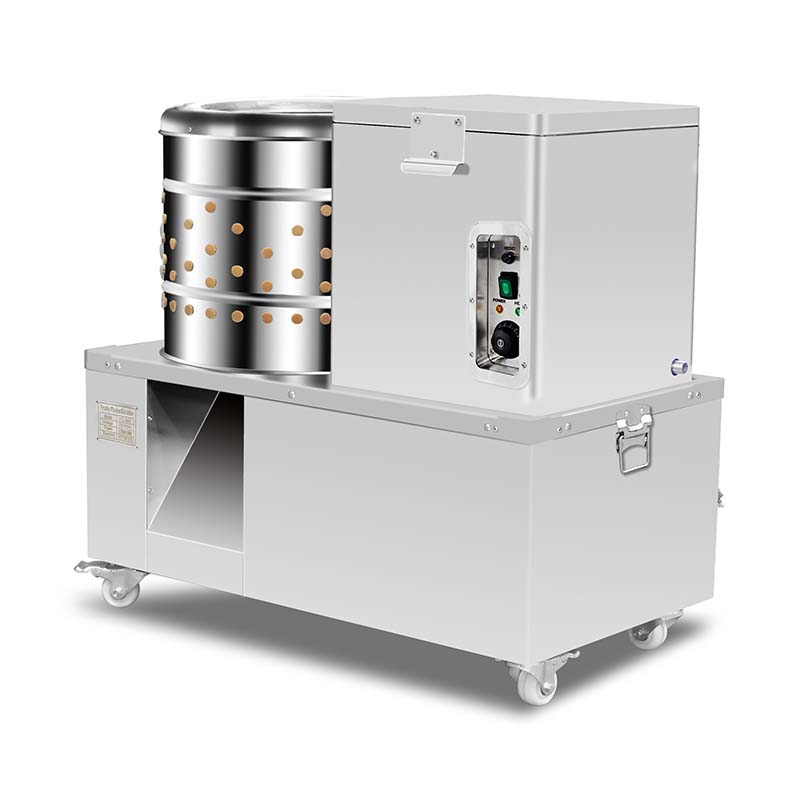
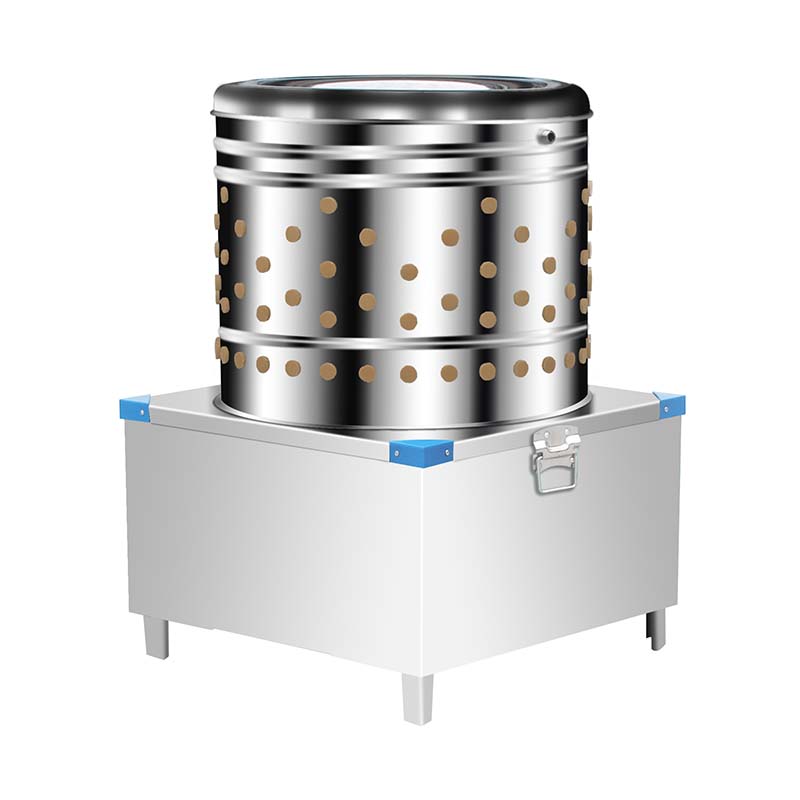
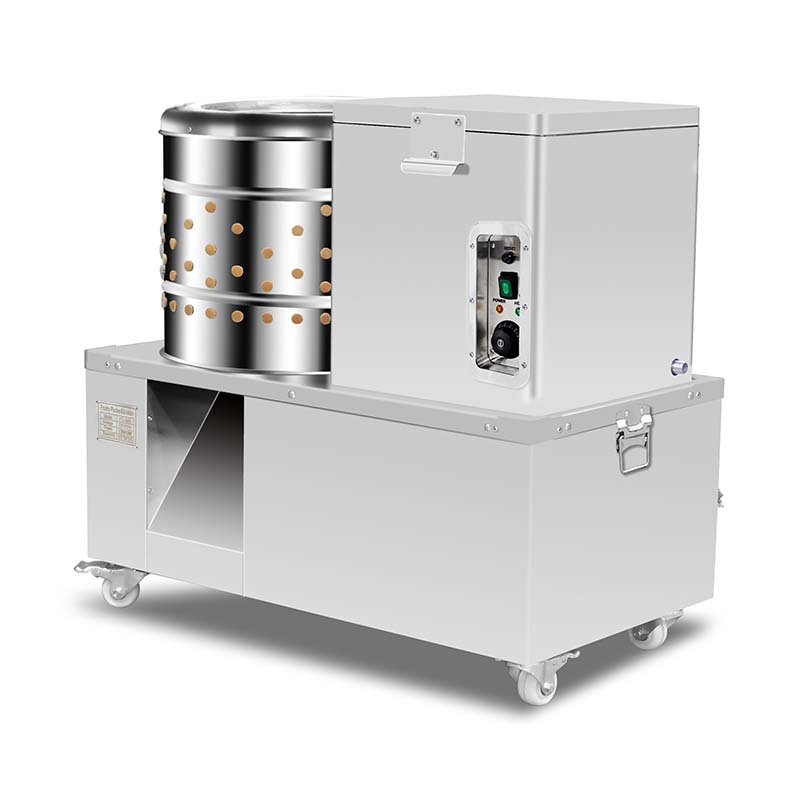
A chicken goes into the scalder and comes out with the feathers loosened. Then it goes into the plucker. The drum spins, the rubber fingers grab the feathers, and the bird comes out clean in under a minute. An electric chicken plucker for poultry processing does the job that used to take a person and a pair of hands fifteen minutes per bird. For small farms, backyard processors, and rural meat shops, the electric plucker is the machine that turns a slow chore into a fast one.

The plucking drum is covered with dozens of rubber fingers. Each finger is a soft, flexible stub that grips the feather and pulls it out as the drum spins. The bird is held against the spinning fingers, and the feathers come off.
The finger material matters. Rubber that is too hard tears the skin. Rubber that is too soft does not grip the feather. An electric chicken plucker with the right durometer rubber fingers pulls the feathers without damaging the bird.
The fingers wear out. The tips round off and the grip weakens. An electric chicken plucker that uses replaceable fingers lets the operator swap the worn ones without replacing the drum.
The drum is the cylinder that carries the fingers. It spins inside the tub. The bird tumbles against the drum and the feathers fall into the tub. The drum has to spin fast enough to pull the feathers and slow enough not to bruise the meat.
The motor drives the drum. The motor has to handle the load of a wet bird against the spinning fingers. An electric chicken plucker with a properly sized motor runs without stalling when the bird is pressed against the drum.
The tub is the container. It catches the feathers and the water. The tub drains through a valve or a hose. An electric chicken plucker with a proper drain lets the operator flush the feathers out after each batch.
The plucker does not work without the scalder. The bird has to be scalded first, in water at the right temperature, to loosen the feathers. Too cold and the feathers will not release. Too hot and the skin cooks and tears.
The scalding temperature and time vary with the bird. Chickens scald at around 60 degrees Celsius for a minute or two. An electric chicken plucker for poultry processing works best when the bird comes out of the scald with the feathers loosened but the skin intact.
Here is what an electric chicken plucker for poultry processing needs to deliver:
The small farm processes a few dozen birds at a time. The plucker runs on the farm power and gets the job done. A small electric chicken plucker makes the processing day shorter.
The rural meat shop processes the customer birds. The plucker has to run batch after batch. A commercial electric chicken plucker with the larger tub and the stronger motor handles the volume.
The backyard processor raises a few birds for the family. The plucker makes the processing manageable. A small electric chicken plucker for the backyard runs on the standard power and stores when the season ends.
The skin tears because the fingers were too hard or the drum spun too fast. A plucker with the right fingers and speed pulls the feathers without the tear. The feathers remain because the scald was too cold. The proper scald temperature releases them. The motor stalls because it was undersized. A properly sized motor runs through the batch.
An electric chicken plucker for poultry processing turns the scalded bird into the clean bird. The drum spins. The fingers pull. The feathers fall. Choose a plucker with the right fingers, the right speed, and the right motor. The bird comes out clean and the skin stays intact.