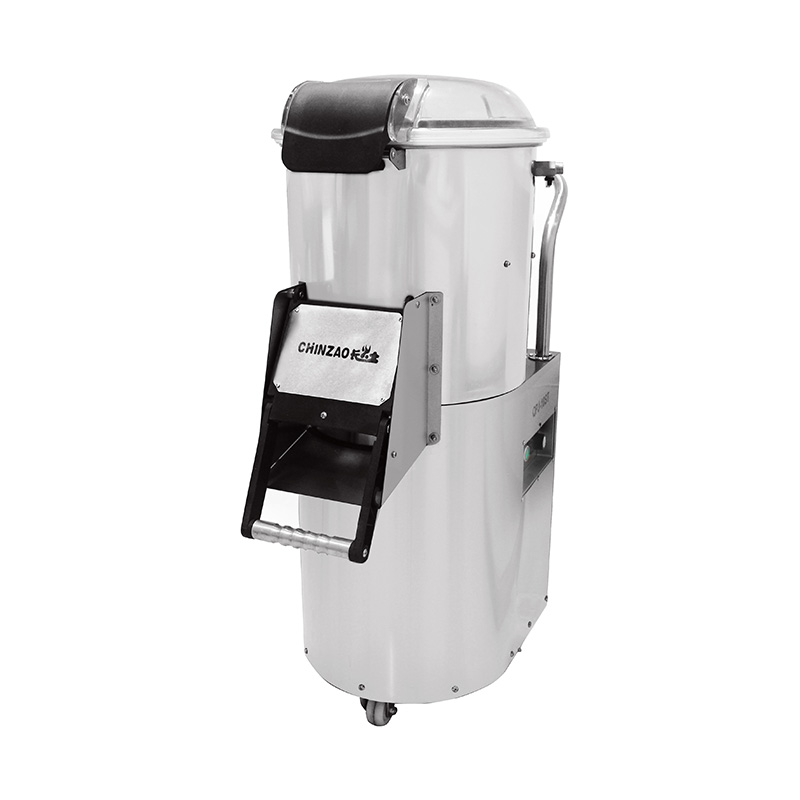
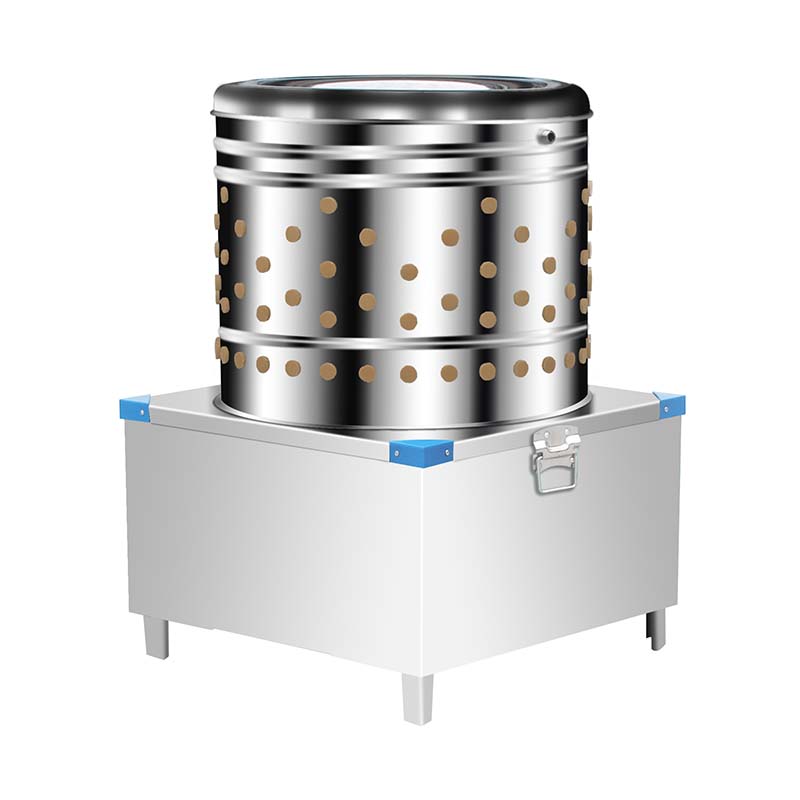
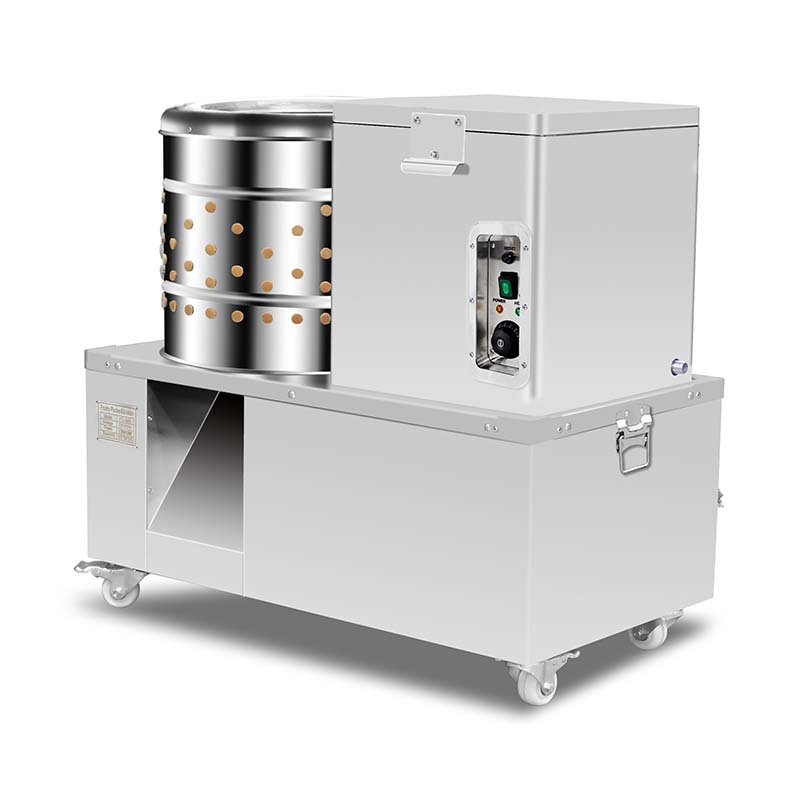
A hand peeler follows the curve of the potato. An electric peeler does not. It tumbles the potato against an abrasive surface and lets friction do the work. That difference is why the machine is fast and why it can also waste more potato than a careful hand. For restaurants, caterers, and food processors, the electric potato peeler turns a slow kitchen chore into a machine cycle. The question is whether the cycle saves more in labor than it costs in yield.

The abrasive is silicon carbide bonded to a disc or a drum wall. Coarse grit peels a batch in a few minutes and removes more flesh. Fine grit takes longer and leaves more potato. There is no setting that gives both speed and yield. The kitchen picks which one it can afford.
The grit dulls with use. A dull drum does not peel slower in a straight line. It peels unevenly, leaving skin on some potatoes and gouging others. Replacing the abrasive is part of the operating cost, not a repair. A peeler with a replaceable disc or drum liner keeps the peeling fast without replacing the whole machine.
The abrasive surface is the working part of the machine. Everything else, the drum, the motor, the water, exists to bring the potato into contact with the grit and keep the grit cutting. That is why the grit choice matters more than any other spec.
The water washes the peel away. That is the obvious job. The second job is keeping the abrasive surface clear so the grit keeps cutting. A peeler that runs low on water loads up with starch and skin, and the drum stops biting.
The drain has to handle the slurry. Potato peel and starch settle and clog a small drain fast. The drain sizing matters more than the drum size in a busy kitchen. A peeler with an undersized drain backs up mid-batch and the operator stops to clear it.
The water also cools the friction. The abrasive peeling generates heat, and the heat builds up in the drum. A steady flow of water carries the heat away and keeps the potato from cooking on the surface.
The drum is the chamber where the potatoes tumble. It has to be large enough for the batch and small enough to keep the potatoes moving. If the drum is overfilled, the potatoes sit on top of each other and the ones at the bottom get peeled while the ones at the top do not.
An electric potato peeler with the right drum size peels the batch evenly. The batch size and the cycle time determine the throughput. A small peeler handles five kilos per cycle. A larger one handles twenty. The kitchen chooses the machine based on the volume it needs to get through the prep line.
The cycle is set by time. The potato is not a fixed size. A batch of small potatoes is peeled before the timer ends. A batch of large ones still has skin when it stops. The operator either runs a second cycle and shrinks the batch, or accepts the uneven result.
That is the limit of the machine. It works best with graded potatoes of similar size. Mixed sizes are where the waste shows up. An electric potato peeler with an adjustable timer lets the operator set the cycle for the potato size and the skin thickness, but the timer still cannot see what is in the drum.
Here is what an electric potato peeler needs to deliver:
A restaurant peeling fifty kilos a day for fries saves labor within weeks. The machine runs before the service, the prep cook moves on to other work, and the fries come out uniform. The labor saving is real and it shows up on the schedule.
A caterer running occasional events may not see the same return. The machine sits between uses. The volume is not there to justify the counter space.
The food processor runs the peeler all day. The machine has to be built for continuous duty. The motor, the drum, and the drain all have to handle the volume without stopping.
The machine earns its space on volume, not on convenience. A kitchen that peels a few kilos a day by hand does not need it. A kitchen that peels fifty does.
The potato shrinks because the cycle ran long, the grit was coarse, or the batch was mixed sizes. None of those are machine faults. They are operating decisions. A peeler does what the timer, the grit, and the batch tell it to do.
The uneven peel is the most common complaint. Some potatoes come out clean, others still have skin at the ends. That usually traces back to the batch size or the grading, not the machine. Grade the potatoes before they go in and the result evens out.
An electric potato peeler removes skin with friction instead of a blade. The grit cuts. The water clears. The timer stops the cycle. Choose the machine for the volume, and grade the potatoes before they go in. The yield will hold and the prep line will keep moving.