A hot dog under a heat lamp dries out. The casing shrinks. The bun gets hard. A steam table keeps food moist but the equipment is large and plumbed in. A food display warmer sits between these extremes. It keeps cooked food at safe serving temperature for hours without ruining the texture. The customer sees the food. The food stays hot. The operator does not need a water line or a drain.

The warmer uses dry heat with humidity control or radiant heat with a water pan
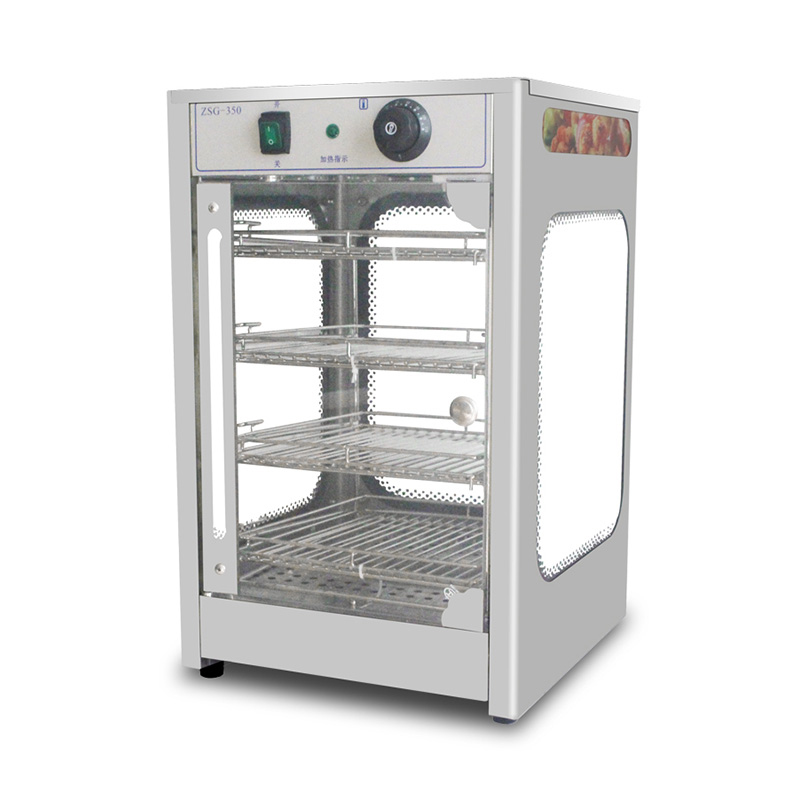
A food display warmer has a heated cabinet with glass doors or an open front. The heat source is at the bottom, top, or rear. Some models use a fan to circulate hot air. Others rely on radiant heat from heated shelves.
The challenge is moisture. Dry heat evaporates water from the food. A food display warmer with a water pan adds humidity. The pan sits at the bottom. Water evaporates as the cabinet heats. The humid air keeps fried foods crisp and meats moist.
Here is how different food display warmer designs handle moisture:
Temperature control keeps food in the safe zone
Food safety requires holding temperatures above 60 degrees Celsius. A food display warmer needs a thermostat that maintains this temperature without overshooting. Overshooting dries out the food. Undershooting allows bacteria to grow.
Good warmers have adjustable thermostats with clear markings. Set it to 70 degrees. The cabinet stays at 70 degrees. Digital controls are more accurate than dial thermostats.
Convenience stores for roller grills and hot cases
A roller grill holds hot dogs and sausages. A food display warmer next to it holds wrapped sandwiches and burritos. The customer grabs what they want. The store does not need a full kitchen.
The warmer needs to be open-front for self-service. The customer reaches in. Glass doors keep heat in but slow down the customer. Open front is faster.
Cafeterias and buffet restaurants for hot food display
A cafeteria line has several food display warmer units in a row. Each holds a different item. Mac and cheese in one. Green beans in another. Fried chicken in a third. The staff refills from the kitchen. The warmer keeps the food hot while it sits.
These warmers are usually rectangular with full glass fronts. The customer sees the food. The staff opens the back to refill.
Food trucks and concession stands for space-saving heat
A food truck has limited space. A food display warmer that sits on a counter or under a counter saves room. The warmer holds pre-cooked food. The cook pulls from the warmer during the rush. No waiting for fresh cooking.
Even heat distribution prevents hot spots and cold spots
A food display warmer with poor air circulation has hot spots near the heating element and cold spots near the door. Food in the hot spot dries out. Food in the cold spot is not safe to eat.
Good warmers have a fan to circulate air. The temperature is consistent from top to bottom and front to back.
Easy cleaning is essential for commercial kitchens
A food display warmer gets greasy. Food spills. Sauces drip. The warmer needs to come apart for cleaning. Glass doors should remove. Shelves should lift out. The water pan should slide out without tools.
Here is what makes a food display warmer easy to clean:
Energy efficiency affects operating cost
A food display warmer runs all day. Sometimes all night. A unit that uses 500 watts costs less to run than one that uses 1,500 watts. LED lighting inside the cabinet uses less energy than incandescent. It also does not add heat to the cabinet.
Double-pane glass doors reduce heat loss. The warmer cycles less often. The heating elements last longer.
The temperature swings widely, drying out food
Cheap food display warmer products have simple thermostats. The heat turns on at full power until the set temperature is reached. Then it turns off completely. The temperature overshoots. Then it drops. The food goes from too hot to barely warm.
Better warmers use proportional controls. The heat tapers off as the set temperature approaches. The temperature stays steady.
The glass fogs up and customers cannot see the food
A food display warmer with single-pane glass fogs on the outside. Kitchen humidity condenses on the cold glass. The customer cannot see the product. The operator wipes the glass constantly.
Double-pane glass with a thermal break stays clear. The outer pane is warm. No condensation.
The fan is loud and annoying in a quiet setting
A food display warmer in a convenience store is fine. Background noise covers the fan. A warmer in a quiet coffee shop is different. The fan whines. Customers notice. Staff get headaches.
Better warmers use low-RPM fans with rubber mounts. The noise is barely noticeable.
A food display warmer is not a complicated machine. It heats. It holds. But small details make the difference between a warmer that works for years and one that frustrates the staff every shift. Look for even heat distribution, easy cleaning, and good temperature control. Pay attention to the glass. Double-pane. Low-e coating if possible. Your food will look better. Your customers will see it. Your sales will reflect the difference.