





Busy food service environments depend on coordinated equipment to maintain both cooking speed and serving consistency. A Stainless Steel Commercial Kitchen Countertop Griddle handles high-temperature grilling and frying, while a Stainless Steel Commercial Electric Bain Marie supports controlled food holding and temperature maintenance. Understanding where the electric bain marie fits within catering operations helps operators choose suitable configurations, plan kitchen layouts, and improve workflow without unnecessary complexity.

Buffet restaurants, hotel breakfast areas, and institutional dining halls require food to remain warm for extended service periods. Dishes such as soups, stews, sauces, porridge, pasta toppings, and side dishes must maintain steady temperatures without overcooking.
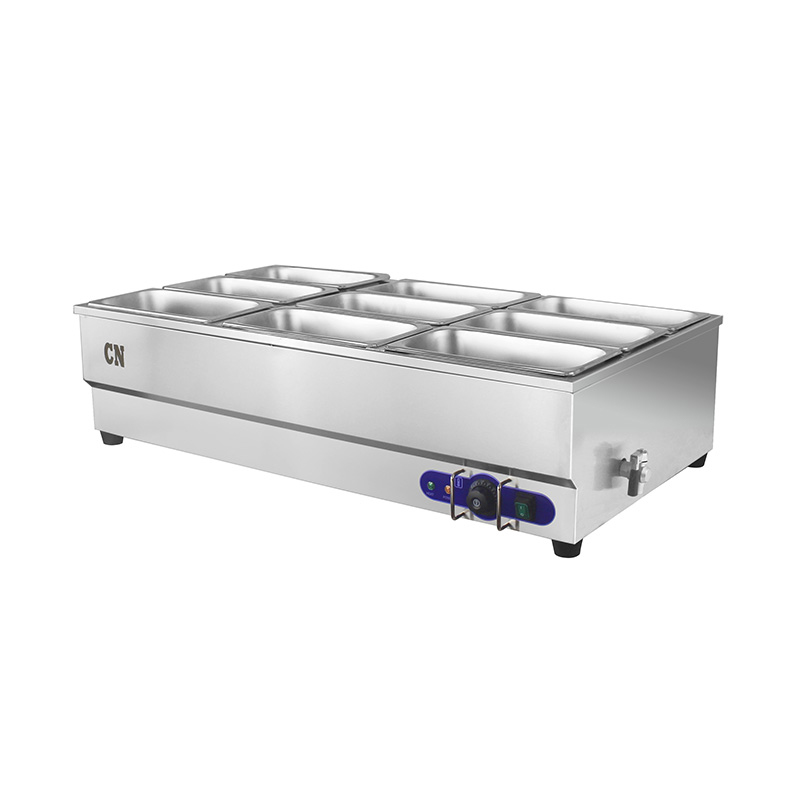
A stainless steel commercial electric bain marie is commonly placed along serving lines where customers can access multiple trays. Its indirect heating method keeps food at a consistent level, reducing the risk of surface drying or scorching at the bottom of containers. Because the water bath distributes heat evenly, the temperature remains stable across all compartments.
This setup helps staff maintain organised service during peak hours. Instead of reheating dishes repeatedly, the bain marie preserves prepared food at a steady serving condition, allowing kitchen staff to focus on replenishment rather than constant temperature correction.
A Stainless Steel Commercial Kitchen Countertop Griddle is widely used for preparing steaks, pork belly, fried dumplings, grilled vegetables, seafood, and specialty snacks. These items are often cooked in batches, especially during busy meal periods.
Once cooking is complete, certain components may need short-term holding before plating. The electric bain marie fills this gap between cooking and serving. For example:
This division of tasks allows the griddle to focus on rapid cooking while the bain marie maintains steady heat for finished items. The result is smoother coordination across kitchen stations.
Street food vendors, food courts, and snack counters operate in compact spaces. Equipment selection must balance functionality and space efficiency. Countertop electric bain maries are often chosen because they require only an electrical connection and limited installation adjustments.
For snack operations offering items such as:
The bain marie serves as a holding station for sauces, toppings, or pre-cooked ingredients. Staff can assemble orders quickly without reheating each component individually.
Because temperature is adjustable and controlled through a thermostat, the unit supports steady service during rush periods without constant supervision. This practical design makes it suitable for environments where staff multitask frequently.
Temporary catering events, corporate functions, weddings, and outdoor food services require flexible equipment that is easy to transport and operate. Gas-based systems may not always be permitted in indoor event venues. Electric bain maries provide a convenient alternative.
Their stainless steel construction offers structural durability during transportation, while removable pans simplify cleaning between events. Since installation typically involves connecting to a standard power source, setup time remains manageable.
During events, food presentation also matters. Some models include transparent tempered glass lids that help protect dishes from dust while allowing guests to view the contents. This supports hygiene without interrupting heat retention.
One common question among operators concerns how long food can remain in a bain marie without affecting texture. While the exact duration depends on the dish, stable heating plays a significant role.
Indirect heating through a water tank reduces aggressive boiling and direct surface contact with heating elements. This design supports:
Precise temperature control allows operators to adjust heat according to food type. For example, thick stews may require slightly higher settings than delicate sauces. Because the thermostat regulates heating cycles, temperature fluctuations remain limited.
Proper use includes monitoring water levels and adjusting lids appropriately to manage evaporation. These simple practices help maintain dish consistency during long service periods.
Catering equipment often operates for several hours each day. Energy consumption becomes a practical consideration. Electric bain maries use built-in heating elements that activate and deactivate based on thermostat readings. Once the desired temperature is reached, the system maintains it without continuous full-power operation.
Compared with open-flame heating, this structure helps stabilize power use over time. The stainless steel body also supports heat retention, reducing unnecessary heat loss to the surrounding environment.
For institutions such as schools, hospitals, and office cafeterias where equipment runs daily, steady energy control contributes to predictable operational planning.