Daily cleaning routines directly affect kitchen efficiency, food safety, and equipment lifespan. A Stainless Steel Commercial Kitchen Countertop Griddle is designed not only for high-temperature grilling and frying but also for practical maintenance after heavy use. When paired with a Stainless Steel Commercial Electric Bain Marie in commercial kitchens, both units must withstand continuous operation while remaining easy to clean. Understanding how the griddle’s structure and material simplify cleaning helps catering operators reduce downtime and maintain hygiene standards without complicated procedures.

One of the primary reasons cleaning becomes manageable is the stainless steel construction. Food-grade stainless steel offers a smooth and non-porous surface that does not easily trap grease, sauce, or food particles.
During cooking, especially when preparing meats, seafood, or vegetables on a flat-top griddle, oils and juices accumulate on the surface. A well-finished stainless steel plate allows these residues to remain on the surface rather than penetrating into microscopic pores.
After service, staff can:
The smooth structure shortens cleaning time compared to rough cast surfaces that may retain debris.
The flat heating surface of a countertop griddle contributes to easier cleaning. Unlike equipment with burners, grates, or open flame components, a flat plate has fewer gaps and corners where grease can accumulate.
This design reduces the need for disassembly. At the end of the service period, the operator typically performs the following steps:
Because the heating elements are located beneath the plate, they remain protected from direct food contact. This structure limits internal contamination and simplifies routine sanitation.
Many stainless steel commercial kitchen countertop griddles include built-in grease trays or oil collection drawers. During cooking, excess oil flows into a designated drainage channel and collects in a removable container.
This feature provides two cleaning advantages:
It prevents grease from spreading across the entire countertop.
It allows quick removal and disposal of accumulated oil.
Instead of wiping grease from surrounding surfaces, staff only need to remove and clean the tray. Proper grease management reduces slip hazards and keeps the cooking area organized.
When selecting a griddle, buyers should check whether the grease tray is easily removable and whether the drainage channel is wide enough to prevent clogging.
Structural details affect cleaning efficiency. Stainless steel commercial griddles designed with rounded internal corners and seamless welding reduce areas where residue can collect.
Sharp internal angles often trap burnt particles, requiring additional scrubbing. Rounded edges allow cleaning tools to move smoothly along the surface.
Seamless welding also limits gaps between panels. When weld joints are smooth and continuous, grease cannot seep into hidden spaces. Over time, this design reduces the risk of odor development caused by trapped residue.
These features support daily sanitation routines without adding labor time.
Stainless steel surfaces tolerate common commercial cleaning agents and tools when used properly. Operators can use non-abrasive scrapers, microfiber cloths, and food-safe degreasers without damaging the surface finish.
Cleaning typically involves:
Avoiding harsh abrasive pads helps maintain the surface integrity. When the surface remains smooth, future cleaning becomes easier because residue is less likely to adhere strongly.
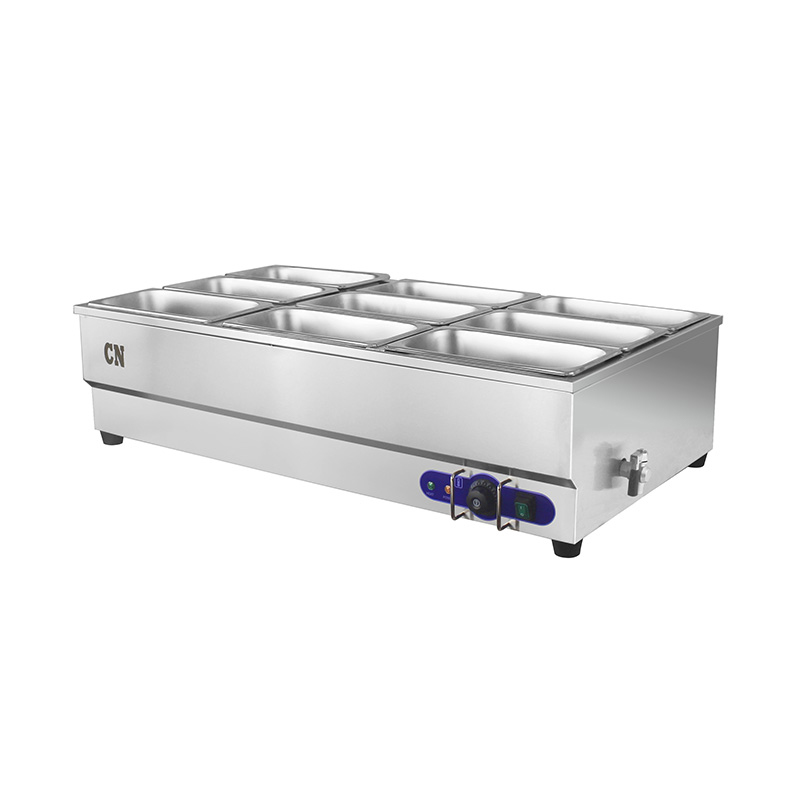
The same material advantages apply to the Stainless Steel Commercial Electric Bain Marie, which also benefits from smooth surfaces and removable components for efficient cleaning.
Ease of maintenance is not limited to the cooking plate. A well-designed countertop griddle often includes removable parts such as:
Being able to detach these components allows staff to wash them separately in sinks. This prevents grease buildup around fixed parts and supports deeper sanitation when required.
For operations that prepare high-fat foods such as bacon, pork belly, or marinated meats, removable components are particularly useful. Regular cleaning of grease trays reduces the risk of overflow and keeps the surrounding area tidy.